At the heart of Price’s nutrition research
ActivatorX.
The enduring partnership
of pasture and sea.
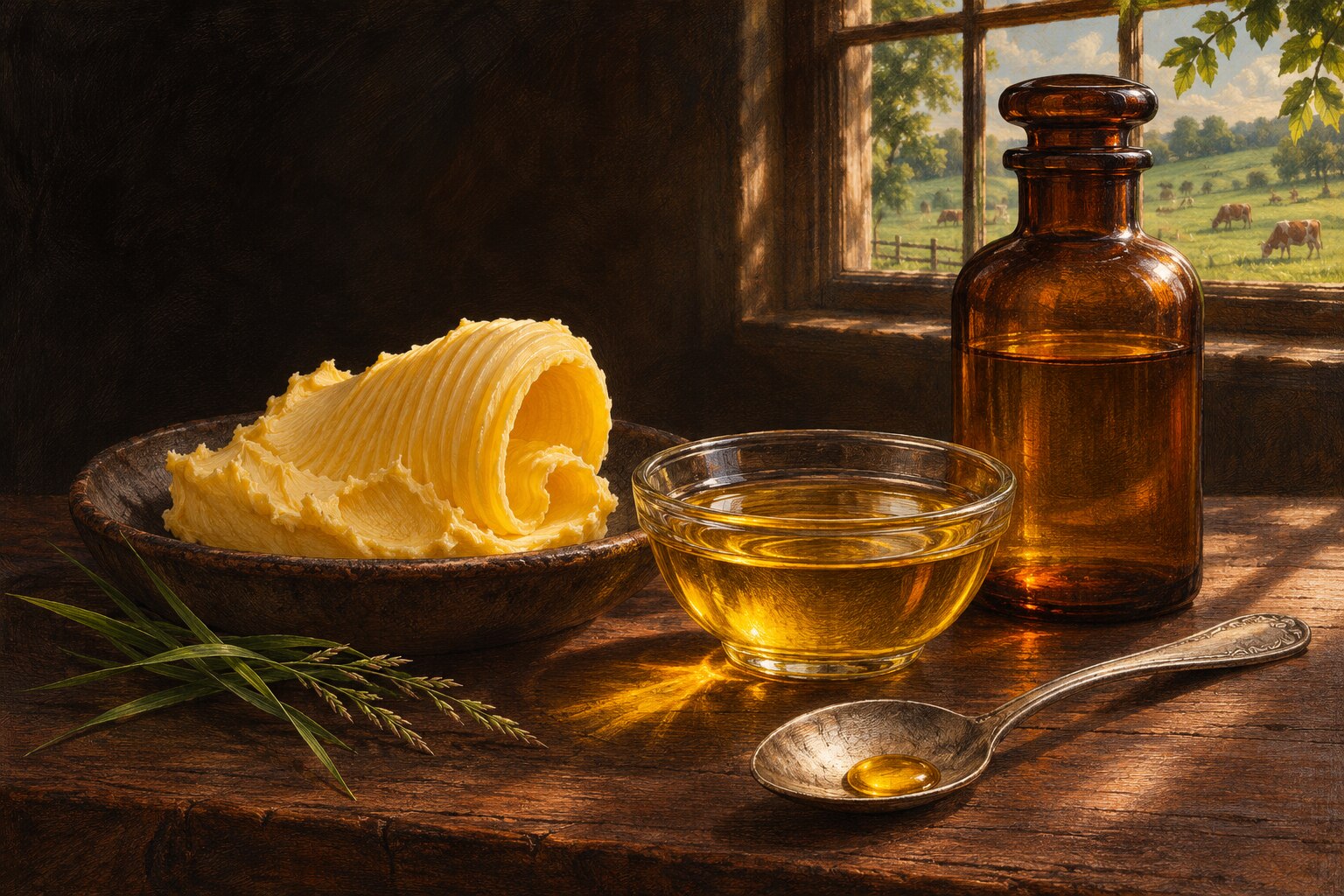
High-vitamin butter oil. Cod liver oil. A search for the factors that help the body put its nourishment to work. Follow one of Price’s most compelling investigations into the foods, the original papers, and the ideas it inspired.
Begin with the question
How does the body
use its nourishment?
Food quality. Mineral use. The living relationship between them.
Price’s interest in food reached into the way the body uses it. Teeth and mineral metabolism were central to that investigation.
In 1943 he described a vitamin-like activity he called Activator X. He associated it with certain foods, investigated it in relation to dental caries, and distinguished it from the vitamin D activity familiar to him. The name marked an observed factor whose chemical identity he had not established.
Weston A. Price · Original 1943 paper
The investigation had deep roots. In a paper published in 1931, Price described dietary changes, cod liver oil, and dairy-derived activator concentrates. His research already treated the food, its fat-soluble factors, and the wider diet as connected questions.
The classic Price pairing
Two oils.
One research story.
Learn each ingredient in its own right. Then follow the relationship that made the combination so interesting to Price.
High-vitamin
butter oil
The dairy side of the story: selected butter, its source pasture, and a separated fraction of milk fat.
- The feeding of the herd
- The season of production
- The way the oil is separated
Cod
liver oil
The marine side of the story: oil from the liver, a food source of fat-soluble vitamins, and a long-running subject in Price’s work.
- The source of the fish
- The vitamin content of the oil
- The extraction and handling
Price reported that a selected butter-oil fraction combined with cod liver oil improved growth in his turkey experiments compared with cod liver oil alone. The pairing also appeared in his dental case accounts, alongside dietary reinforcement and dental care.
High-vitamin pasture butter oil
The pasture matters.
So does the fraction.
Price associated particularly active butter with cows eating rapidly growing grass, fresh or rapidly dried. He described melting selected butter, allowing it to crystallize for 24 hours, then centrifuging it and retaining the liquid fraction above the crystalline material.
Take “high-vitamin” seriously enough to ask what was measured. Look for the named vitamins, their amounts per serving, the testing method, and the batch. That is how an appealing food story becomes something you can examine.
Butter, ghee, and a product sold as high-vitamin butter oil each deserve their own description. Ask the producer how the starting butter was selected and how the finished oil was made.
Explore the grass-fed field guideThe marine half
A long history
in a small spoon.
Cod liver oil deserves a chapter of its own.
Price’s preserved 1927 paper studied raw and “activated” cod liver oil. In that work, activation referred to radiant-energy treatment. It is a useful piece of vocabulary when reading the early papers.
Price, 1927 · Read the preserved cod-liver-oil paper
Fish liver oils are natural sources of vitamin D. Vitamin D supports calcium absorption and normal muscle and immune function. Those roles give this food a clear place in a discussion of nourishment.
Vitamin D · Functions and food sources
For a particular bottle, read the actual vitamin amounts, serving size, ingredients, storage directions, and test results. The name of an oil is a beginning; its composition and handling complete the picture.
The later fermented-oil tradition
Fermented
cod liver oil.
This is where the historical pairing meets a modern production story.
Green Pasture says its work on fermented cod liver oil began around 2007, after developing a butter-oil product inspired by Price. Its present-day blends bring those two product lines together.
the oil.
The company’s FAQ describes fermentation of the livers before the oil is collected.
In a manufacturer-hosted account, Jacob A. Friest describes livers placed in sealed vats with salt and a starter culture. Oil separates above the water and solids; the collected oil is then centrifuged. Friest wrote that the review was commissioned by Green Pasture’s owner.
Jacob A. Friest · Manufacturer-hosted process account
The production story deserves the same attention as the pasture story. Ask which species is used, how the process is controlled, and what the finished batch was tested for. Keep the producer’s explanation alongside the analysis.
Price’s historical cod liver oil, his use of the word “activated,” and today’s fermented-liver process each have their own history. Modern fermented blends belong to the later tradition inspired by his work.
The connection that carried the question forward
From Activator X
to the K2 conversation.
In Wise Traditions, Spring 2007, Christopher Masterjohn argued that vitamin K2 explained the factor Price called Activator X. He compared Price’s observations with the distribution and biological roles of vitamin K2. It is a later interpretation of Price’s work, and a valuable route into the chemistry.
Three fat-soluble vitamins to know
Different roles.
Connected nourishment.
Vision, growth
& tissue function
Vitamin A contributes to normal vision, immune function, growth, and cell development. Preformed vitamin A is found in animal foods, including liver, eggs, and dairy.
Calcium absorption
& bone nourishment
Vitamin D helps the intestine absorb calcium. Fish liver oils and fatty fish are natural sources; smaller amounts occur in foods such as egg yolks.
Vitamin-dependent
protein activity
Vitamin K supports an enzyme that modifies proteins involved in clotting and bone metabolism. K2 describes the menaquinone family; MK-4 and MK-7 are two forms.
A closer look at the chemistry
Small molecular steps.
Important biological jobs.
Osteocalcin is a vitamin-K-dependent protein found in bone. Matrix Gla protein is another, present in tissues including blood vessels and cartilage. They help explain why the conversation extends from nutrient intake into mineral metabolism.
A 1980 cell study found that active vitamin D increased production of a vitamin-K-dependent bone protein in cultured rat cells. The authors were P. A. Price and S. A. Baukol; P. A. Price was a different researcher from Weston A. Price.
P. A. Price & S. A. Baukol, 1980 · Bone-protein synthesis
In 1997, mice lacking the matrix Gla protein gene developed abnormal arterial and cartilage calcification. This was a gene experiment exploring the protein’s function.
Luo and colleagues, 1997 · Matrix Gla protein
In 2010, researchers identified UBIAD1 as a human enzyme involved in making MK-4. That work adds molecular detail to the relationship between vitamin K forms.
These studies illuminate nutrient biology. They do not, by themselves, establish the vitamin content or clinical effects of a particular bottle of oil.
Let the foods stay in the picture
A richer table.
A wider food story.
 Continue with Sally’s Nourishing Fats
Fu and colleagues measured several forms of vitamin K in dairy foods in 2017, including milk, cream, and cheeses. The study found a wider range of menaquinones than a simple “K2” label suggests. It examined dairy-food composition, rather than commercial butter-oil blends.
Fu and colleagues, 2017 · Vitamin K in dairy foods
Animal foods and some fermented foods contribute menaquinones. Natto is rich in MK-7; cheeses can contain other forms. The bacterial cultures and fermentation conditions help shape the amounts present.
Let that variety build your food knowledge. Explore eggs, dairy, fish, and familiar food traditions. Learn the ingredient, its preparation, and the nourishment it contributes.
Take the details seriously
Know what is
in the bottle.
A useful product description gives you more to work with than a memorable name.
What is the butter-oil source?
Ask about the farm, the herd’s feed, the season, how the butter was selected, and the oil-separation process. Ask which measurements support any “high-vitamin” description.
What does the vitamin analysis show?
Look for amounts per serving, units, vitamin forms, the laboratory method, and a batch or lot number. If K2 is listed, ask which menaquinones were measured.
How was the cod liver oil made and handled?
Ask about the fish species, extraction method, fermentation controls where relevant, oxidation and contaminant testing, storage, and shelf life. Read the producer’s current documentation.
How should I approach supplement use?
Concentrated oils need measured use. Excess preformed vitamin A can be harmful and can cause birth defects during pregnancy.
Excess supplemental vitamin D can also be harmful. Review overlapping products with a qualified clinician, especially for children or during pregnancy.
If you take warfarin or another vitamin K antagonist, keep vitamin K intake consistent and discuss changes with your prescriber.
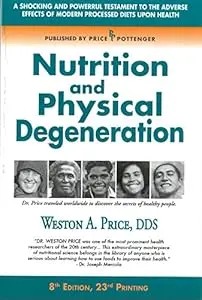
Weston A. Price
Nutrition and Physical Degeneration
Follow Price’s travels, photographs, and observations of traditional food cultures in the book at the heart of this archive.
Buy on AmazonBook & edition details →Modern 8th edition shown.
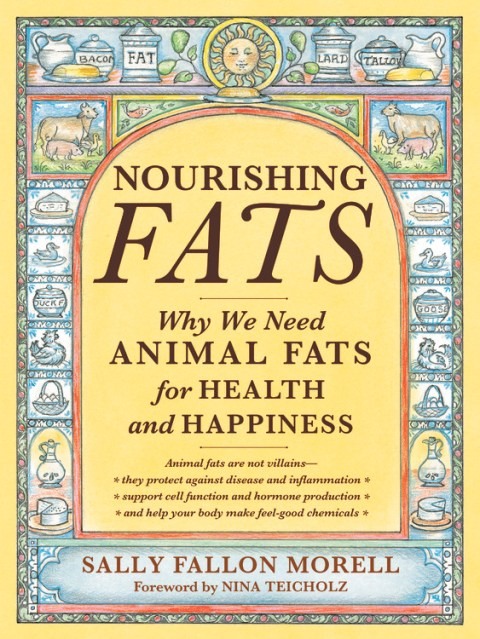
Sally Fallon Morell
Nourishing Fats
Explore Sally’s case for butter, egg yolks, and traditional animal fats, including the food ideas that connect her work with Price.
Buy on AmazonBook & edition details →Go straight to the source
The research
behind the story.
Read Price’s papers in sequence. Preserved scans open through the archive; later papers link to the source collection.
The early cod liver oil experiments
Calcium metabolism, raw oil, and activated oil.
The nature and role of activators
Follow the developing research vocabulary.
Seasonal variations in butter-fat vitamins
The pasture and season side of the inquiry.
Diet, oils, and the dental investigations
A source-linked paper preceding the Activator X account.
The new vitamin-like activator
The central paper in this feature: JADA, pages 888–905.
An independent reading guide. Historical findings, later interpretations, and manufacturers’ process descriptions retain their authorship. The opening still life is an original AI-generated illustration. Sources reviewed November 28, 2026.