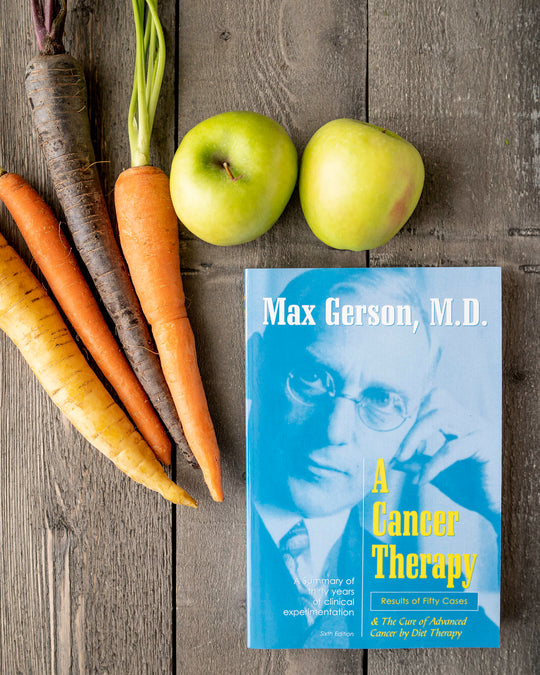
A beautiful food philosophy becomes useful through ordinary skills: finding good produce, washing and storing it, making a satisfying meal and organizing a kitchen you can return to.
A produce-centered table
Vegetables with character
Carrots, leafy greens, roots and seasonal vegetables bring a range of colors and textures to the kitchen.
A warm center
A bowl of vegetable soup or a baked potato can give a meal a familiar starting point.
Fruit in season
Apples and other fruit connect the table to orchards, markets and the changing year.
Time and care
A clear preparation area, clean equipment and sensible storage support the work behind every meal.
The soup at the center of the story
The soup commonly called “Hippocrates soup” appears throughout later Gerson teaching. It belongs here as a named preparation in that tradition, not as a claim that an ancient physician wrote the modern recipe. For the actual ingredients and method, use a clearly identified cookbook or the Institute’s current material.
Soup also offers a straightforward point of entry for everyday cooks: learn how different vegetables soften, how much liquid they release and how texture changes with cooking. You can explore those skills without turning a meal into a medical protocol.
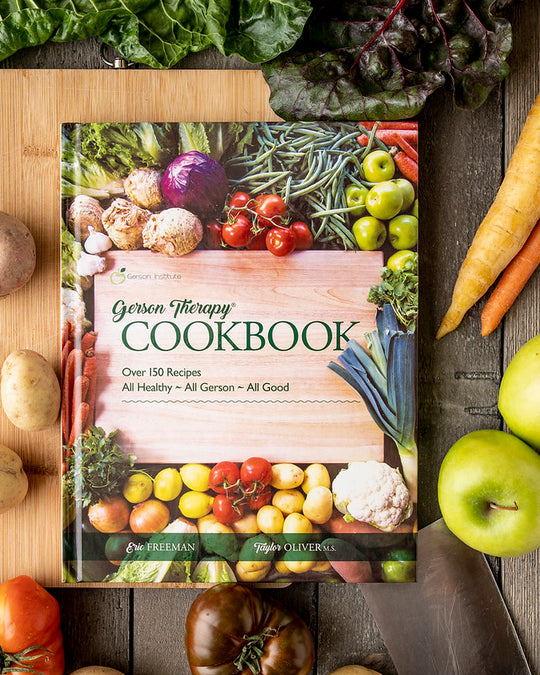 Browse the Institute cookbook
Make the routine workable
Plan the produce
Buy with a realistic preparation schedule in mind. Keep a short list of ingredients you regularly use and build connections with a reliable farm or market.
Give cleaning its own place
Keep clean utensils and ready-to-eat ingredients away from dirty produce. Follow equipment instructions, and put perishables away promptly.
Share the work
Shopping, cooking and cleanup take time. A written household plan makes the practical demands visible and helps family members share them.
Daily food ideas, clearly identified
For general culinary inspiration, try a vegetable soup with a potato, cooked greens beside a grain dish, or a colorful salad with a meal that supplies enough protein and energy for your needs. These are present-day editorial examples, not a reproduction of Gerson’s clinical schedule.
The complete Gerson regimen involves restrictions, supplements and procedures beyond ordinary cooking. Its suitability cannot be inferred from the appeal of a vegetable-filled table. Medical nutrition needs change with diagnosis, weight loss, medicines and treatment.
Keep the edition on the counter
Max Gerson’s own book, Charlotte’s later manuals and the Institute’s contemporary cookbook answer different reading needs. Choose deliberately: original theory, later teaching, recipes or a personal account. Check authorship when two covers share a similar title.
A good kitchen notebook can record the source of a recipe, what you cooked and what your household enjoyed. Keep clinical changes in a separate conversation with your care team. That leaves room for both practical food learning and responsible treatment decisions.

Continue into the original work
Look at the author, date and availability of each source. A historical observation and a later interpretation have different places in the story.