Begin below the plant.
Ask about organic matter, cover crops, crop rotation and the way nutrients return to the ground.
Good food.
Old wisdom.
Soil first. All the way to the table.
Get back to the ground.
Living soil. Thoughtful growing. Food with a source you can trace. Take the land behind your nourishment seriously.
Rooted in the land.
Made for the kitchen.
The whole chain matters
The Gerson food story reaches beyond the kitchen.
In his 1946 testimony, Gerson spoke about soil, fertilizer, food and the interruption of natural nutrient cycles. Those concerns were part of his explanation of chronic disease and his reason for choosing the foods he used.
His historical theory is a starting point for learning, not a substitute for looking closely at a present-day farm. Ask how the grower builds soil, manages pests, harvests crops and handles the food after it leaves the field.
Ask about organic matter, cover crops, crop rotation and the way nutrients return to the ground.
Learn the variety, season and growing conditions. A carrot, an apple and a leaf each have a different story.
Ask when the crop was picked, how it was stored and how it reaches you. Freshness depends on that whole journey.
Prepare it with care. Enjoy the ingredient, learn the grower and make those connections part of ordinary life.
Gerson’s account connected the production of food with the nourishment available to people. The Senate record preserves that argument in his own voice, alongside the clinical cases and questions presented at the hearing.
His later publication titles continued to connect soil, food and metabolism. The archive records those papers separately, including the works still awaiting a verified reading copy. A title supplies a research route; it does not replace reading the paper.
Begin on printed page 98, PDF page 109.
Open the original recordTake the words seriously
A practical starting point for farm questions.
USDA organic certification operates under defined production, handling and labeling rules. It concerns how a product is produced and handled. Ask which certifier and standard apply to the food you are considering.
“Local,” “fresh,” “regenerative” and “organic” describe different things. A short journey does not automatically establish a farming method; a farming label does not establish a medical effect.
The more specific the question, the more useful the answer.
Follow the next question
Learn the place of carrots, apples and green leaves in the Gerson juice tradition, and what changes when a food becomes a juice.
Explore the juicing storyGet serious about the source
A strong answer gives you a growing practice, a harvest story and a producer you can return to.
Take the farm questionsA simple text checklist to keep or print.
Ask for the farm name and location. A market stall or delivery service may sell its own harvest, other farms’ crops, or both.
Ask about current certification and the certifier. If a grower is not certified, ask them to describe their practices clearly rather than substituting a vague label.
Ask about compost, crop rotation, ground cover and water. Look for a practical account suited to that particular land.
Ask how the crop was cooled, stored and transported. Different produce has different storage needs; use the grower’s handling information alongside food-safety guidance.
Learn the harvest calendar, order deadlines and pickup arrangements. A reliable supply relationship can be more useful than a one-off impressive purchase.
Organic produce still needs appropriate washing and handling. Certification does not make food free of harmful microbes. For vulnerable people, discuss raw foods and unpasteurized juice with the care team.
Make the knowledge edible
Choose an ingredient. Learn its source. Make something worth sitting down for.
Learn how familiar vegetables cook, how their textures change and how to make a meal your household enjoys.
Explore the kitchen guideFollow the ingredients into their role in Gerson’s program, with the original history and later teaching kept distinct.
Read the juicing guideStart with a directory, then talk to the grower. Confirm practices and availability directly.
Find farms and produce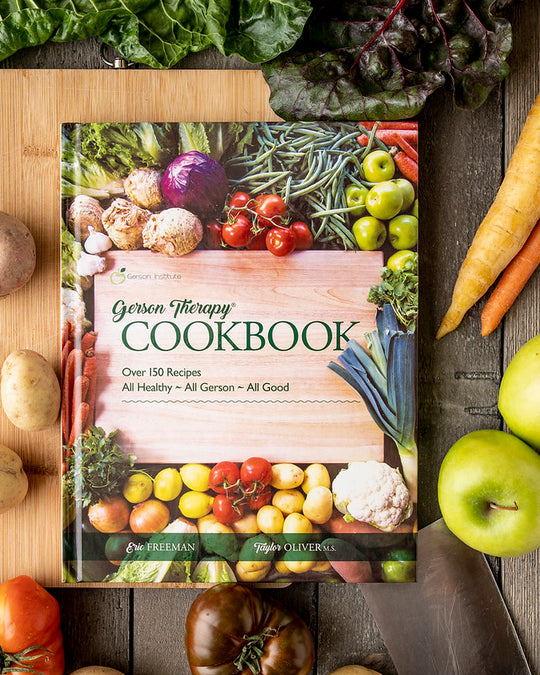
Keep digging
Take food curiosity back into the historical record.
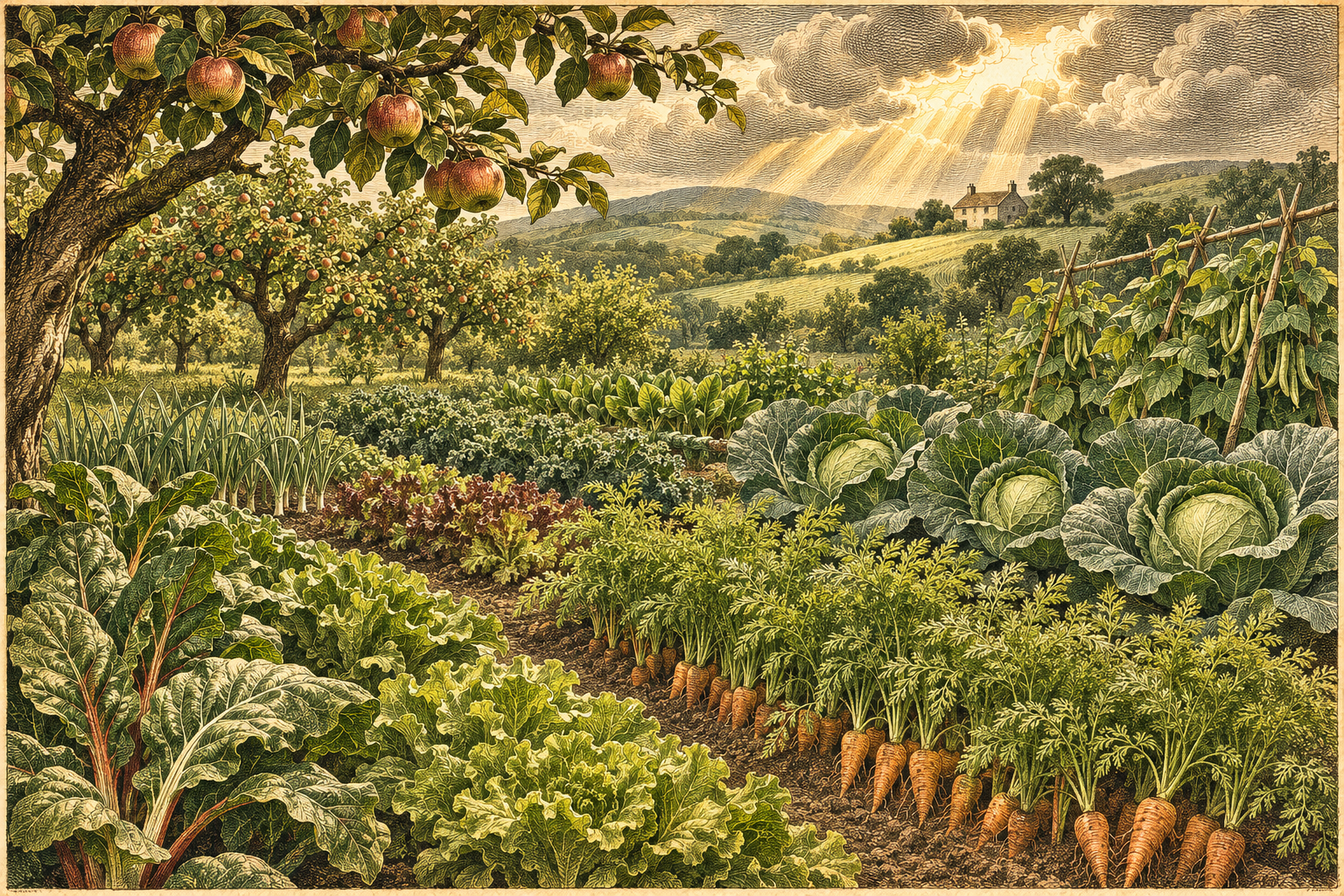
Historical claims remain attributed to Gerson. Farm questions are present-day editorial guidance. The opening garden is an original AI-generated illustration, not a photograph of a documented farm. Sources reviewed November 28, 2026.